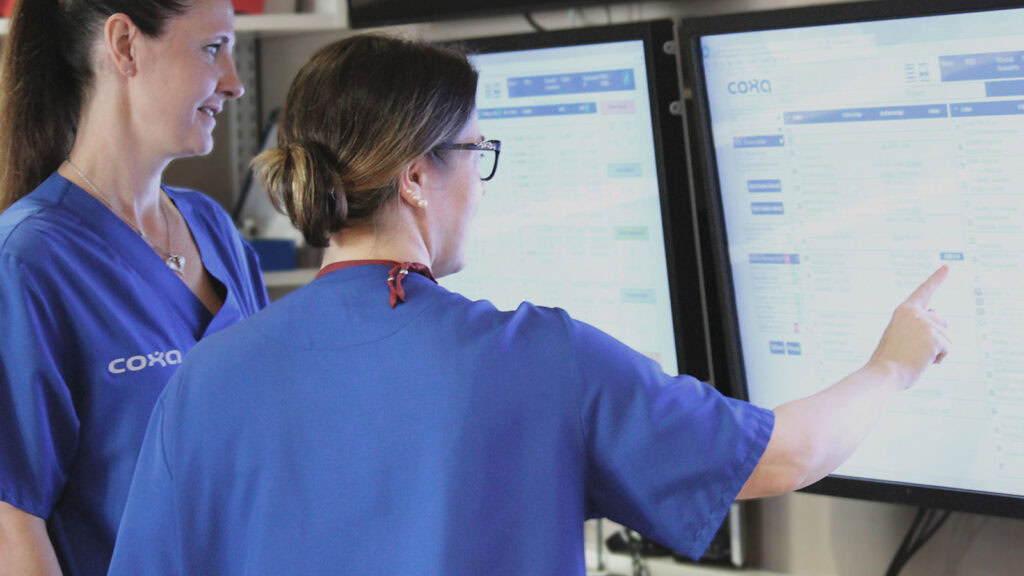
Valkeakoski got a new, impressive health centre hospital in spring 2020. In this connection, the hospital also wanted to develop its operating models to meet future needs. As part of the efforts, the hospital wards began to use the tried-and-tested Pulse – a system that helps you to plan and lead the daily operations of a hospital ward. This has resulted in smoother daily operations, a higher quality of operations and a more satisfied staff.
Aiming for a ward with improved safety, efficiency and well-being
The first steps towards the new hospital were taken several years ago, when the three municipalities of Valkeakoski, Akaa and Urjala decided to merge the wards of their health centres in southern Pirkanmaa into a new health centre hospital.
The new hospital called for shared, modern processes and a service promise that the staff from all three health centres could commit to.
The participants began planning the reform with an open mind.
They did not want to transfer their existing procedures, some of which seemed outdated, into the new hospital as such. Instead, they sought to make daily operations as smooth as possible, both for the patients and staff.
As in most hospitals, whiteboards and printouts used to play a key role in daily work planning at the wards in Valkeakoski, Akaa and Urjala. They were used to monitor the situation in the wards, the incoming and outgoing patients, as well as the staff on duty. The goal was to get rid of the cumbersome, inefficient and error-prone procedure and move on to a new level.
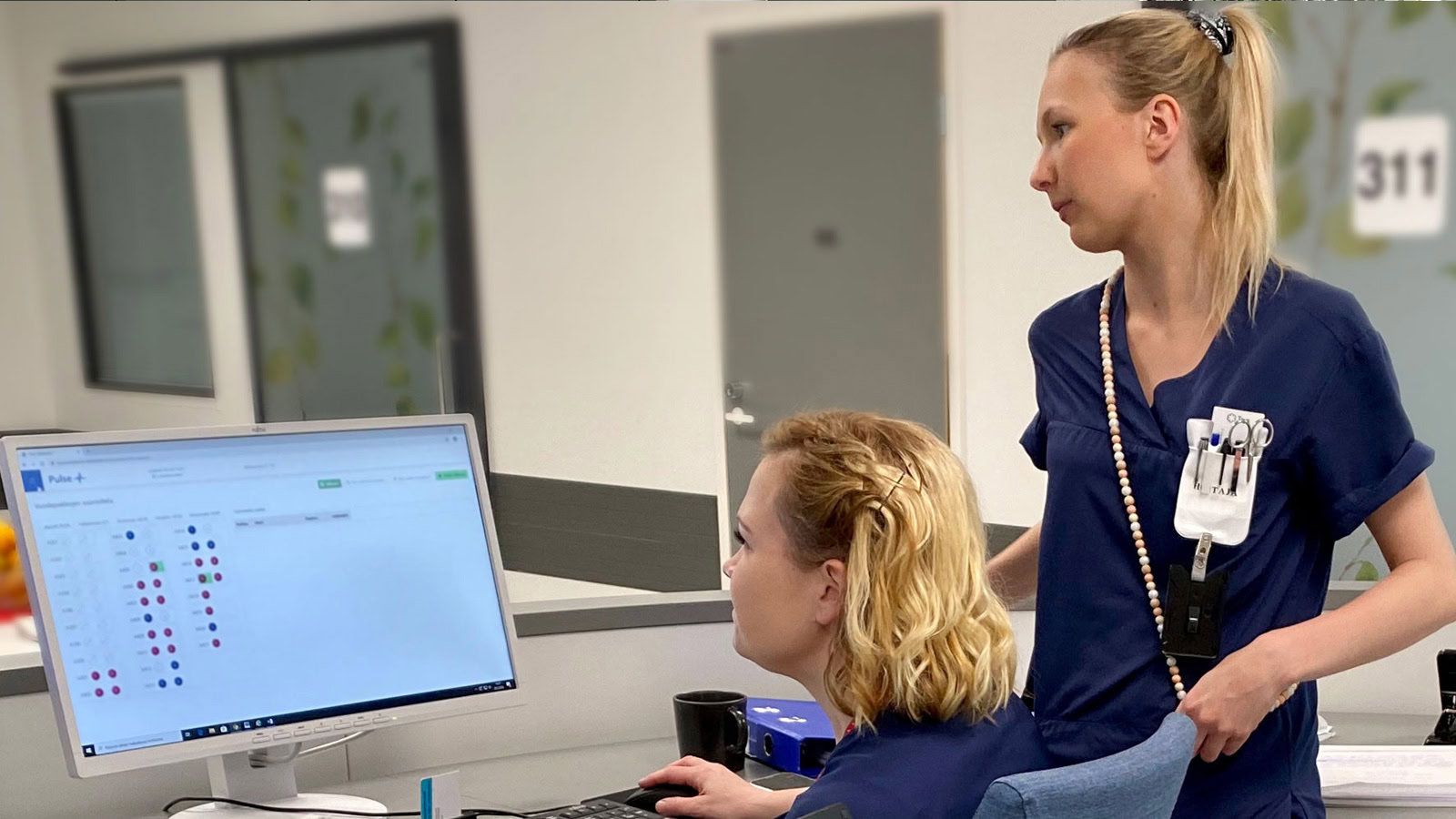
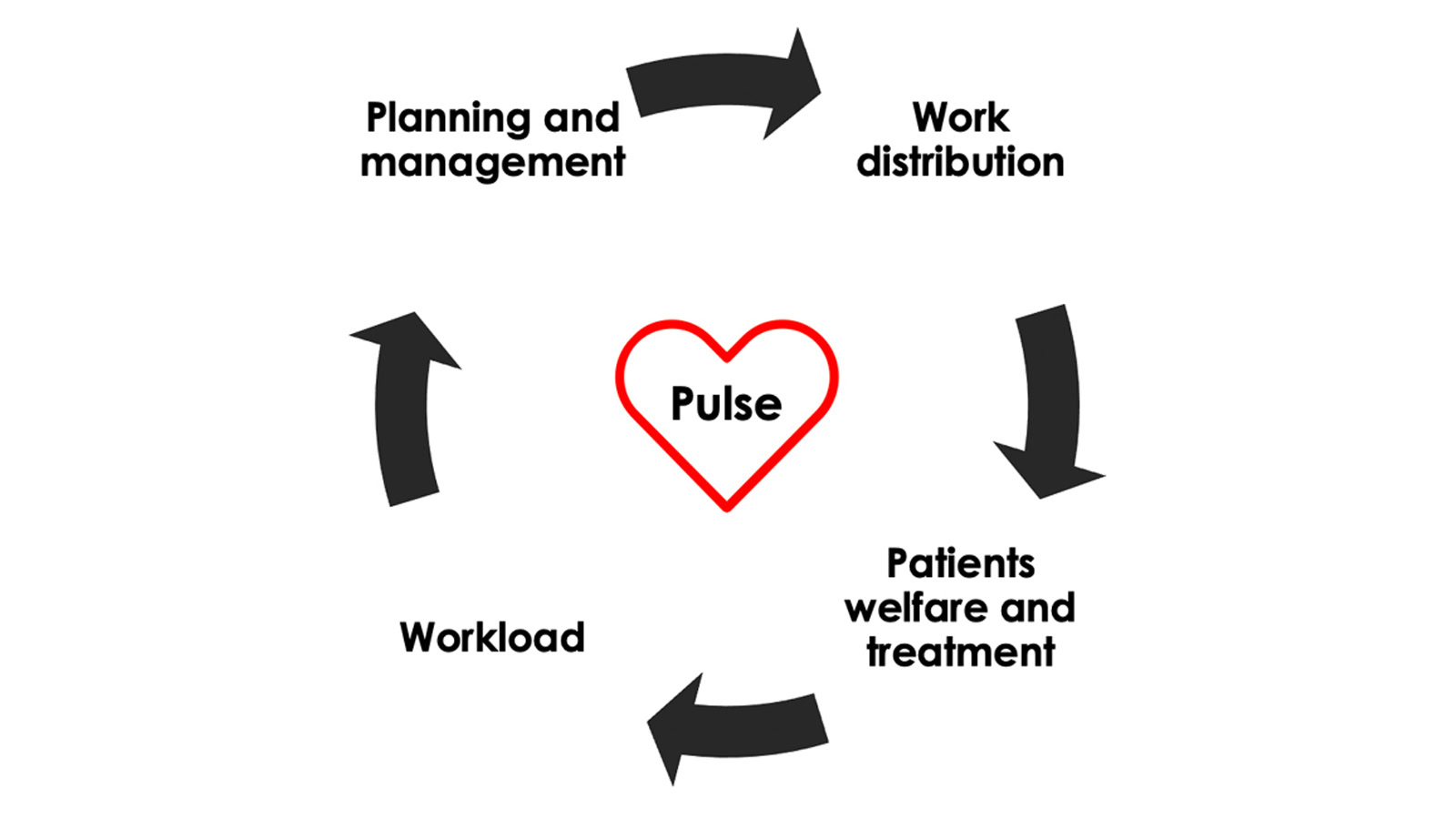
The Pulse system, originally developed by Solita in cooperation with Coxa Hospital for Joint Replacement, caught the client’s interest in Valkeakoski. The browser-based Pulse system is now the heart of planning and management at the inpatient ward. Among other things, it helps schedule the discharge of patients and plan bed places for incoming patients. It also gives an overview of all the patients in the inpatient ward, as well as the reason for their admission and the plan for their discharge. The system is also used to plan and monitor the work distribution and workload of nurses.
Coxa’s positive experiences of Pulse made the system an excellent starting point in Valkeakoski. The results – increased efficiency, safer operations and improved staff coping – were convincing.
Users involved in the planning from the outset
Solita’s team collaborated with the staff of Valkeakoski health center hospital to adapt the Pulse system to the needs of all the wards: acute, palliative, rehabilitation, geriatric and home hospital.
The work was divided into three parts: the planning of common processes for the new hospital, the specification of functionality in Pulse, and the accumulation of customer insight, as well as technical development.
Sanna Rautalammi, Welfare and Health Director of the City of Valkeakoski, oversaw the planning of common processes for the new hospital. Solita’s service designers took part in workshops to ensure that the new operating models would be taken into account in the Pulse solution as far as possible. Likewise, for planning purposes, it was important to get acquainted with the inpatient wards in Valkeakoski, Akaa and Urjala to better understand their methods and any difficulties they encountered.
“From the very beginning, we wanted our staff to be closely involved in the planning of new operating models and practices to ensure that the changes were a joint effort.
The launch of a new hospital involves numerous aspects, but for us, it also offered a natural way to examine many of our conventional methods from a clean slate, so to say. We also wanted to take advantage of the new opportunities offered by modern technology and also take the management of our hospital into the digital era,” Sanna Rautalammi explains.
Users were closely involved in development from the specification stage onwards. The workshop participants formed as comprehensive and multidisciplinary a group as possible of nurses, head nurses, physiotherapists and physicians. At the workshops, the participants discussed the different work stages as well as existing operating models in the Pulse system, which had been found to work well for Coxa. These were then fine-tuned to the needs of basic health care.