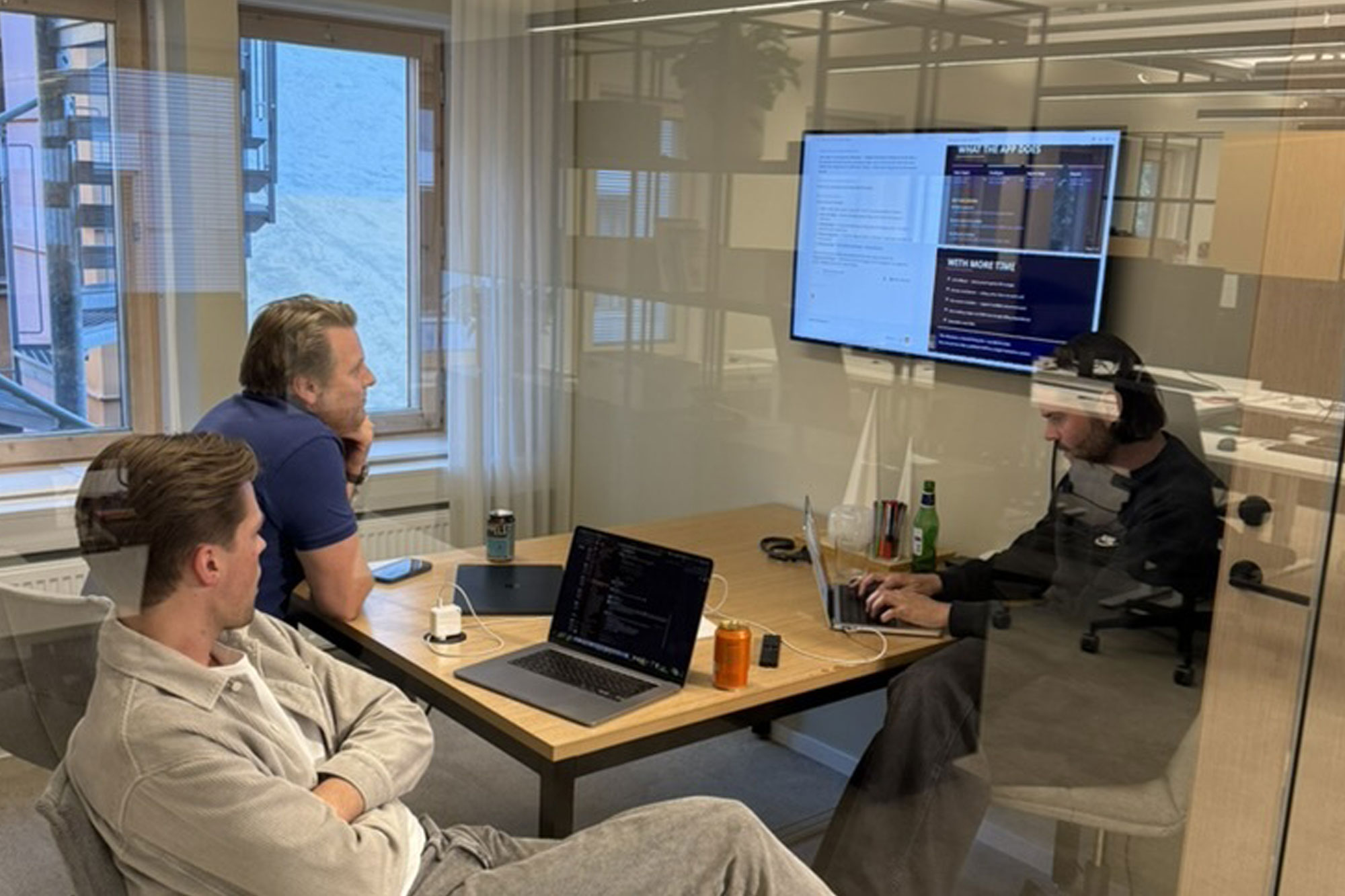
Generative AI is evolving at an incredible pace, making it impossible for anyone to keep up by reading alone. We believe the best way to learn is by building, which is why we ran a GenAI hackathon at Solita Sweden.
We wanted to bring people together to explore generative AI, collaborate across competence areas, and learn by building. What started as an after-work event quickly became something much bigger, showing how fast people can learn, how much they can build in just a few hours, and how experimentation builds confidence that carries into everyday work.
Learning happens fastest when you build something yourself
The hackathon grew out of an internal learning journey around two technologies that are becoming increasingly common in GenAI projects: Retrieval Augmented Generation (RAG) and semantic layers. After running a series of internal competence development sessions, we wanted to move beyond theory and give people the opportunity to build with them.
Many people are curious about generative AI but hesitate because they think they need deep expertise before they can begin. We wanted to show that getting started is often much easier than people expect.
The hackathon also introduced many participants to LiteLLM, which made it easy to explore different language models without complex setup. For several participants, just realising how accessible these tools already are became an important takeaway.
Four practical cases gave everyone a running start
One challenge with hackathons is that teams often spend too much time deciding what to build instead of actually building. To avoid this, we prepared four practical cases that every team could choose from.
Each case provided a clear starting point while still leaving room for different approaches. Participants could build an AI assistant that recommends the right pet based on a person’s lifestyle and preferences, or an agentic application for planning a pub crawl that considers location, walking distance, pricing, and personal preferences. Two other cases focused on semantic layers, either by matching consultants with suitable assignments or by generating personalised festival schedules based on natural language input.
Behind the more playful concepts, each case introduced techniques that are increasingly common in customer work. Participants could use any coding assistants or AI tools they preferred, which made it possible to explore different working styles while solving the same problems.
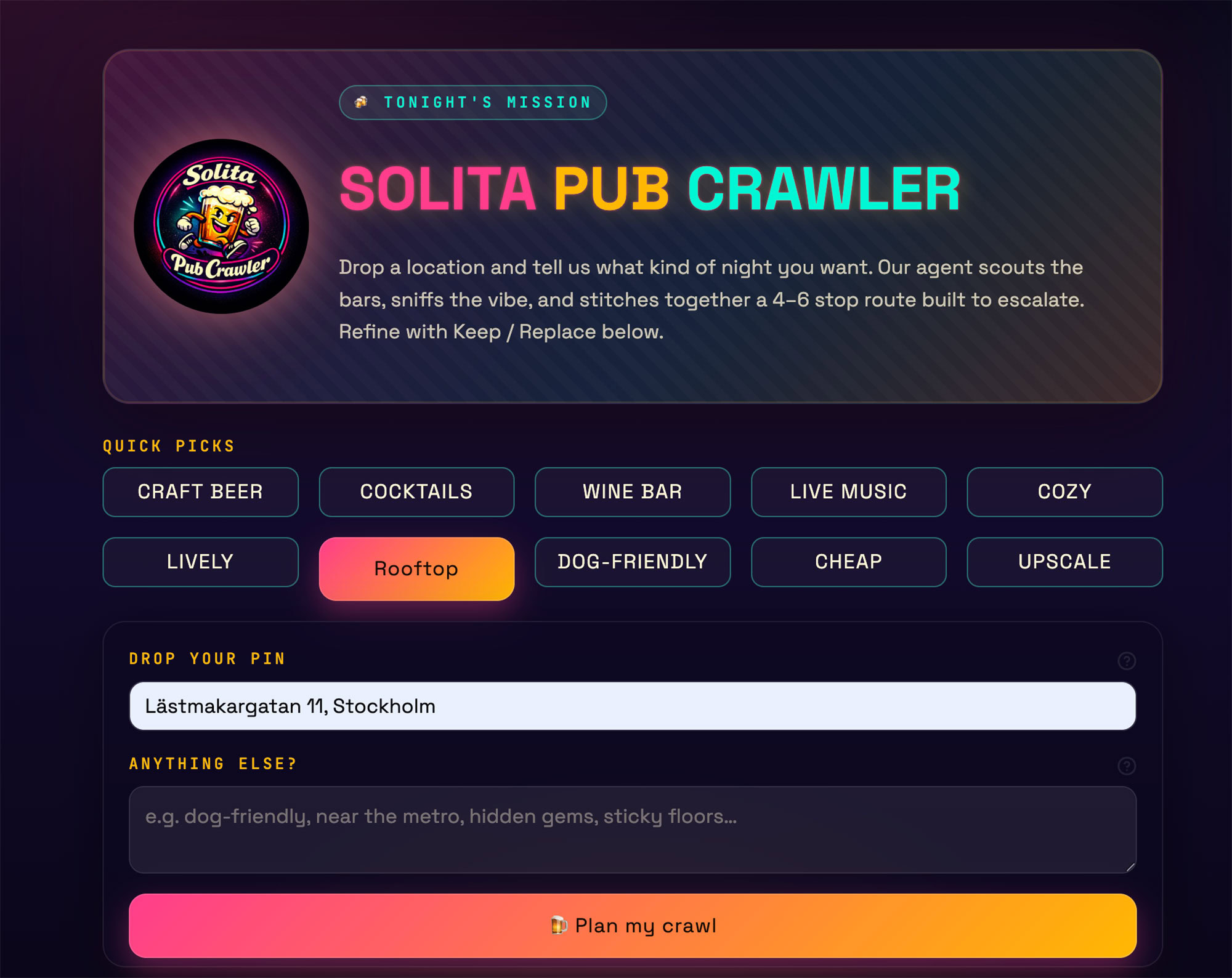
Case: Pub crawler
Confidence grows faster than technical skills
One of the most interesting observations wasn’t what the technology enabled, but how quickly people adapted to working with it.
Participants came from different backgrounds and levels of experience with generative AI, yet every team managed to build something meaningful within just a few hours. We had expected that some groups might struggle to get started, but most found their rhythm quickly and began iterating together in a natural way.
Working with generative AI also proved to be a highly collaborative process. Teams gathered around a single screen, discussing ideas, refining prompts, and deciding together what to try next. Contributions came as much from reasoning and problem solving as from writing code. In one case, a team started with a TypeScript project, but most participants were more comfortable in Python. Instead of rewriting everything manually, they asked the language model to translate the project and continued building from there.
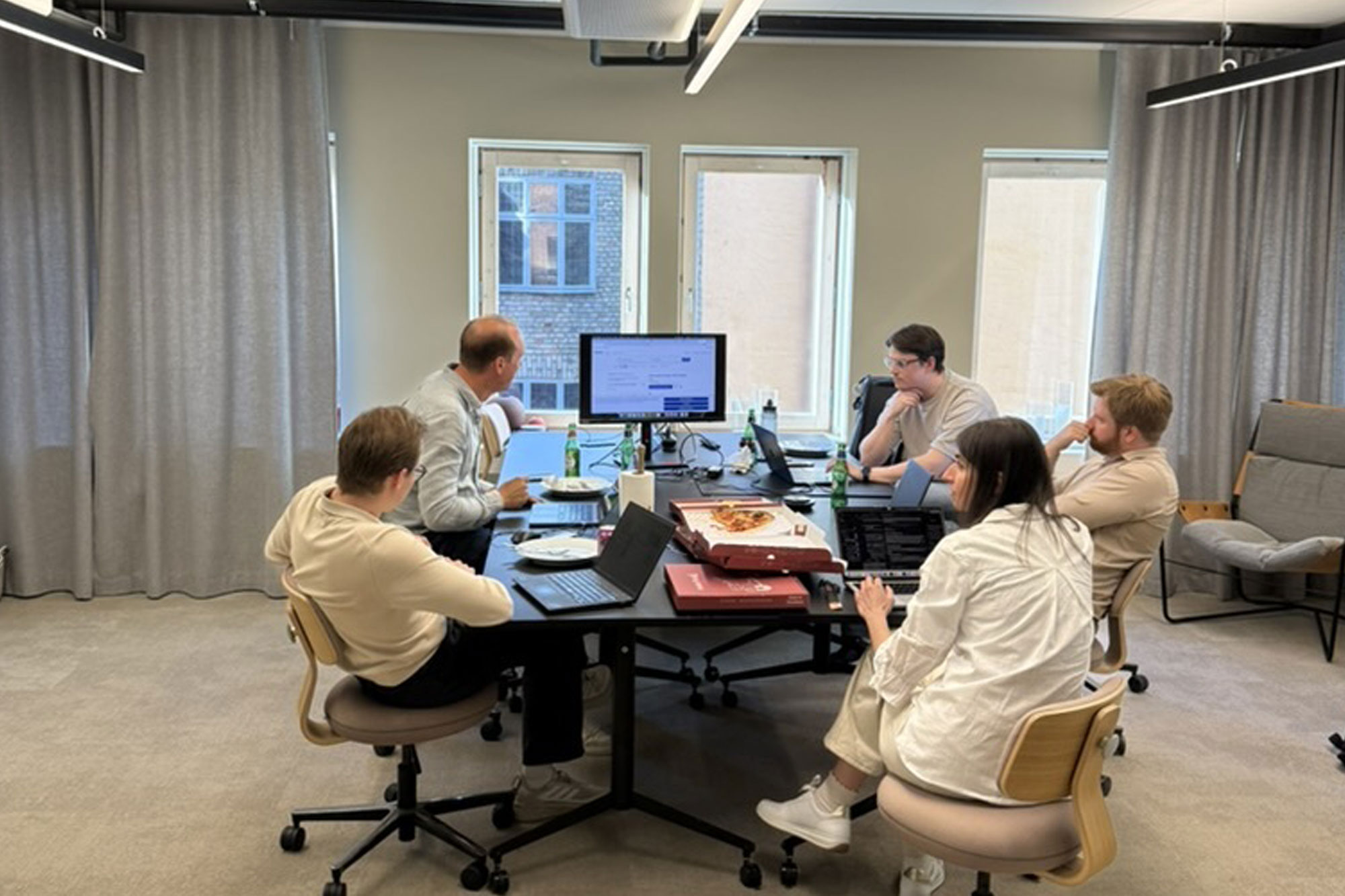
Better collaboration starts with shared experiences
While the technology brought people together, the collaboration itself turned out to be just as valuable.
The event connected software developers, data scientists, data engineers, and cloud specialists who don’t always work as closely in day-to-day projects.
As generative AI work increasingly spans multiple disciplines, these connections are becoming more important.
Working together on a shared challenge helped participants better understand each other’s skills and perspectives. Those conversations continue beyond the hackathon, and in many cases make it easier to collaborate in customer projects later on. Once you have solved problems together, it becomes more natural to reach out, ask for input, or bring someone into a project where their expertise is needed.
Experimentation creates better customer work
Although the hackathon format was intentionally playful, the learning connects directly to customer projects. Working with RAG, semantic layers, and prompting techniques helped participants better understand where these approaches create value in real customer contexts. Participants also became more confident using AI in their daily work, developing practical skills in prompting, framing problems, and understanding model limitations.
Of course, there is a clear difference between experimenting and delivering production-ready systems. Customer projects require architecture, security, quality assurance, and human judgement. But as generative AI continues to evolve, people need opportunities to test new ideas, learn what works in practice, and bring those insights into customer work. The hackathon was one way of creating that space.
Creating space for people to learn together is more important than ever
Looking back, the biggest success was probably the overall energy in the room. Many participants realised that building AI-powered applications is more accessible than they had expected. Others discovered tools they hadn’t used before. Everyone left with something tangible they could bring into their daily work.
The biggest lesson wasn’t about the technology itself. It was how quickly curiosity turned into capability once people were given the space to experiment together.
In a field that changes as fast as ours, that is an important insight.
The hackathon proved our point: creating space for people to build, explore, and learn together is more important than ever.
Interested in working at Solita? See our open positions or get our talent community newsletter.
Authors

Ana Bella Dimeska
Software Developer, Solita

Erik Kronberg
Data Scientist, Solita

Jan Stein
Data Scientist, Solita

Kelsie Enqvist
Software Developer